
“A human hug uses two arms. A dog hug uses fifty pounds of ribs, shoulders, and unwavering devotion.”
You’re standing at the kitchen counter waiting for the kettle to boil when suddenly you feel thirty, fifty, or eighty pounds of warm fur pressing gently against your legs.
If you step to the left, they shift left.
If you move, they move.
It’s as if your dog has decided that personal space is a completely unnecessary human invention.
Many dog owners wonder if this behavior means affection, anxiety, protection, or something else entirely.
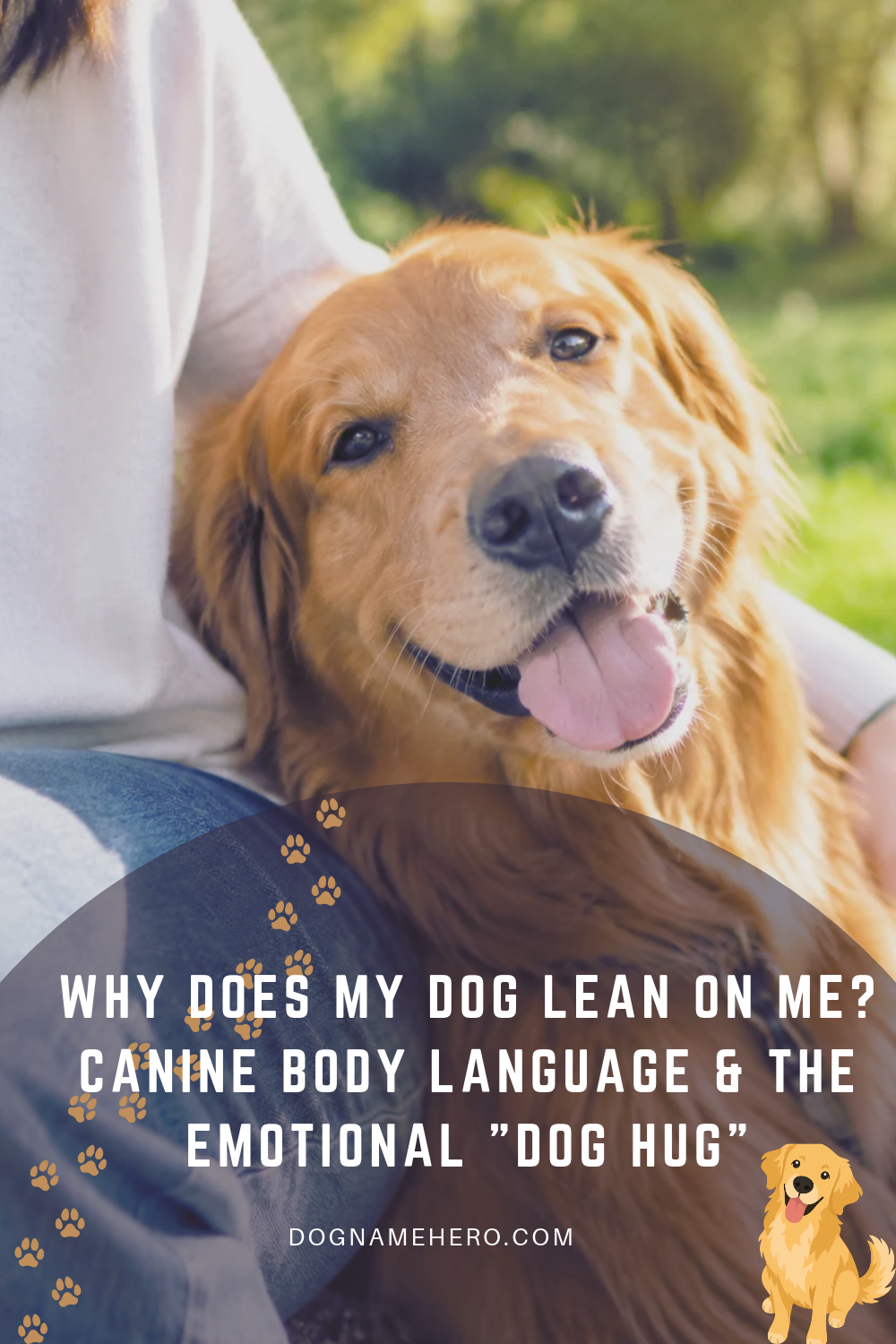
Why Does My Dog Lean on Me?
Most dogs lean on their owners as a sign of trust, affection, comfort, and social bonding. Physical contact helps many dogs feel secure and connected to the people they love. In most cases, leaning is a positive behavior that reflects a strong relationship rather than dominance or control.
Old training myths often suggested that leaning was an attempt to establish dominance. Modern canine behavior experts generally view leaning as a social behavior rooted in comfort, attachment, and communication.
The Canine Equivalent of a Human Hug
Dogs do not possess opposable thumbs, long arms, or the ability to wrap us in a traditional hug.
In fact, many dogs find full-body hugs uncomfortable, especially when given by strangers.
Instead, dogs have developed their own version of affection.
The Lean.
By pressing their shoulder, ribcage, or entire body against you, they create close physical contact that can strengthen feelings of safety and connection. Physical interaction between dogs and humans has also been associated with oxytocin release, often referred to as the “bonding hormone.”
For many dogs, a lean simply says:
“I trust you. I feel safe here.”
Common Reasons Dogs Lean on People
Affection and Bonding
The most common explanation is also the simplest.
Your dog enjoys being close to you.
Many dogs seek physical contact the same way humans seek a comforting hug, hand on the shoulder, or reassuring touch.
Seeking Comfort and Security
Dogs often lean when they feel uncertain.
Loud thunderstorms, fireworks, unfamiliar environments, or stressful situations may cause a dog to seek reassurance through physical contact.
In these moments, your presence acts as a source of stability and comfort.
Wanting Attention
Some dogs learn that leaning gets results.
A gentle lean often leads to petting, praise, conversation, or belly rubs. If a behavior consistently produces positive attention, dogs may repeat it.
Checking In During Walks
Have you ever felt a quick bump against your leg during a walk?
Many behaviorists view this as a social check-in.
It’s your dog’s way of maintaining connection while exploring the world.
Breed Personality
Certain breeds are naturally more physically affectionate than others.
Breeds often described as “leaners” include:
- Labrador Retrievers
- Golden Retrievers
- Newfoundlands
- Bernese Mountain Dogs
- Great Danes
- Boxers
Of course, every dog is an individual, but some breeds genuinely seem convinced that they are lap dogs regardless of size.
Emotional Grounding and Comfort
Have you ever had a difficult day and found your dog quietly settling against your side?
Dogs are remarkably observant.
They pay attention to changes in body language, tone of voice, daily routines, and emotional energy.
While they don’t understand every human problem, many dogs seem incredibly skilled at recognizing when their favorite person needs companionship.
A dog’s lean during difficult moments often serves as mutual comfort. While they feel safer near you, you may also experience reduced stress simply from their calming presence.
When Dog Leaning May Signal Something More
Although leaning is usually a positive behavior, sudden changes deserve attention.
Sudden New Clinginess
If an independent dog suddenly refuses to leave your side, consider whether something else has changed.
Possible reasons include:
- Pain or discomfort
- Anxiety
- Illness
- Vision or hearing loss
- Cognitive changes in senior dogs
If the behavior appears out of character, a veterinary checkup is worth considering.
Leaning with Signs of Fear
Watch for accompanying body language such as:
- Trembling
- Panting
- Tucked tail
- Whale eye (showing the whites of the eyes)
- Flattened ears
In these situations, your dog may be seeking protection rather than simply expressing affection.
Senior Dog Changes
Older dogs sometimes become more physically dependent on family members.
As vision, hearing, or mobility changes occur, increased contact-seeking behavior can provide comfort and reassurance.
How to Respond When Your Dog Leans on You
The best response depends on context.
If your dog is relaxed and happy:
- Offer gentle affection
- Speak calmly
- Enjoy the moment
If your dog appears anxious:
- Remain calm
- Provide reassurance
- Avoid punishment or scolding
- Help remove obvious stressors when possible
In most situations, there’s no need to discourage leaning unless your dog is large enough to accidentally knock over children or elderly family members.
Dog Parent Wisdom: Key Takeaways
- Leaning is usually a sign of trust, affection, and emotional connection.
- Most dogs lean because they enjoy physical closeness with people they love.
- Leaning is not generally considered a dominance behavior.
- Always observe the rest of your dog’s body language for clues.
- Sudden changes in behavior may warrant a veterinary visit.
- Physical affection strengthens the human-canine bond.
- Sometimes the simplest explanation is the correct one: your dog just wants to be near you.
The Sacred Canine Bond
A Loving Word from the Dog Walk
The next time your dog quietly plants their sturdy body against your legs while you’re making coffee, don’t rush away.
Pause.
Place your hand gently on their shoulder.
Feel the steady rise and fall of their breathing.
In a world full of deadlines, notifications, and constant distractions, your dog is offering something increasingly rare: complete presence.
There is no hidden agenda.
No expectation.
No condition.
Just trust.
And perhaps that is what makes a dog’s lean feel so special. For a brief moment, it reminds us that being loved doesn’t always require words. Sometimes it feels like fifty pounds of fur quietly telling us we’re home.
Frequently Asked Questions
Does my dog lean on me to show dominance?
No. Modern canine behavior research does not support the idea that leaning is primarily a dominance behavior. In most cases, dogs lean because they feel comfortable, secure, or affectionate.
Why does my dog lean on strangers?
Some dogs are naturally social and enjoy physical interaction with people. If their body language remains relaxed and friendly, leaning may simply be an expression of confidence and sociability.
Why does my dog lean on me and not other family members?
Dogs often develop stronger attachments to certain people based on daily interactions, caregiving routines, training sessions, and emotional connection.
Why does my dog lean against me when sleeping?
Sleeping against you provides warmth, comfort, security, and social closeness. Many dogs naturally seek contact with trusted family members while resting.
Why does my dog push their body into me when I pet them?
Many dogs enjoy physical affection and will lean into petting to increase contact and prolong the interaction.
Why does my dog lean on me when other dogs are around?
Your dog may be seeking reassurance, checking in socially, or choosing to stay close to a trusted person in a stimulating environment.
Can I teach my dog not to lean?
Yes. If leaning becomes problematic, you can redirect your dog to sit, lie down, or settle on a mat using positive reinforcement methods.
Is it bad to comfort my dog when they lean on me during thunderstorms?
No. Calm reassurance, gentle touch, and your presence can help many dogs feel safer during stressful events.
