
“The language of the dog is written not in words, but in the soft, silent arcs of a tail that speaks directly to the heart of those who know how to listen.”
Have you ever sat on the floor watching your dog and wondered what they’re trying to tell you?
Most dog owners naturally look at their pup’s face for clues. Yet one of the most expressive parts of canine body language is wagging right behind them.
A dog’s tail can reveal excitement, uncertainty, confidence, fear, curiosity, and dozens of emotions in between. Learning to understand dog tail positions is one of the easiest ways to improve communication with your canine companion. Once you know what to look for, you’ll begin noticing that your dog is constantly sharing their feelings without making a sound.
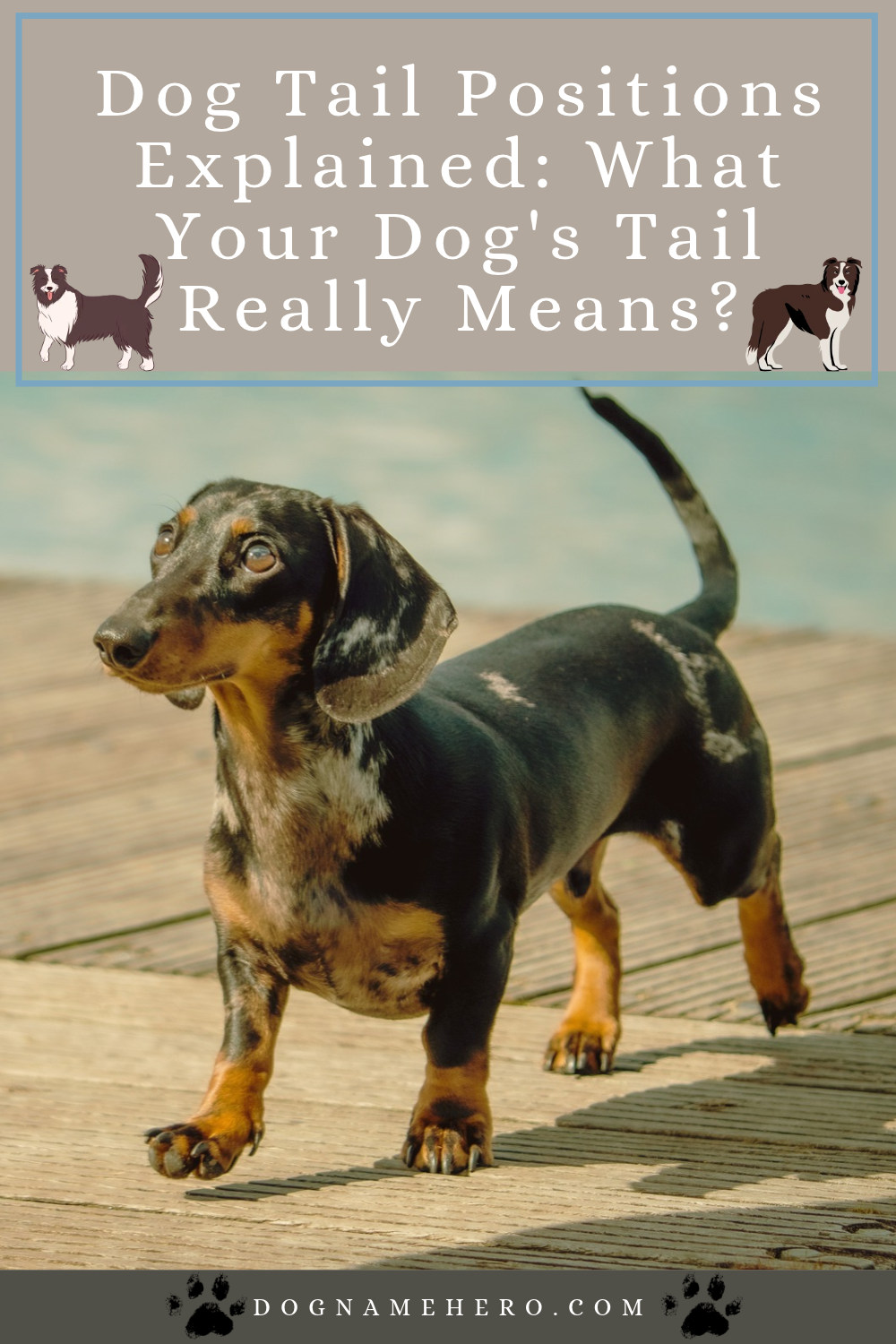
What Do Dog Tail Positions Mean?
Dog tail positions help communicate a dog’s emotional state. A relaxed tail usually indicates comfort and confidence, a high tail often signals alertness or excitement, while a tucked tail commonly suggests fear, anxiety, or insecurity.
However, no tail position should be interpreted in isolation. To truly understand what your dog is feeling, you should always consider their overall body language, facial expression, and the situation they’re experiencing.
The Basics of Dog Tail Language
At its core, dog tail language acts as an emotional barometer.
While many people assume that a wagging tail automatically means happiness, the reality is more nuanced. A wag generally indicates emotional arousal, meaning your dog is engaged, stimulated, or reacting to something.
Whether that emotion is positive or negative depends on the position, speed, and movement of the tail.
Dogs communicate using their entire bodies, and the tail is one of their most effective signaling tools.
Dog Tail Positions at a Glance
| Tail Position | Common Meaning |
|---|---|
| Neutral / Mid-Level | Relaxed, comfortable, content |
| High and Stiff | Alert, confident, intensely focused |
| High with Rapid Vibrations | Excited, overstimulated, or tense |
| Broad, Loose Wag | Friendly, happy, and relaxed |
| Slow Wag | Uncertain, cautious, assessing a situation |
| Low Tail | Submissive, unsure, or mildly anxious |
| Tucked Tail | Fearful, nervous, stressed, or insecure |
Remember that tails vary naturally between breeds, so always compare your dog’s behavior with their normal baseline.
Interpreting the Height of the Tail
High and Stiff
A tail held high above the body often indicates confidence, alertness, or heightened interest.
Imagine someone standing on tiptoes to get a better view. Your dog is paying close attention and gathering information about their surroundings.
When combined with stiffness elsewhere in the body, however, a high tail can signal tension or challenge.
Neutral or Mid-Level
This is often the posture of a relaxed dog.
When your dog is comfortably walking beside you, exploring familiar places, or relaxing at home, their tail usually rests at a natural mid-level height.
Think of this as your dog’s emotional baseline.
Low Tail
A tail carried lower than normal often suggests uncertainty or mild unease.
Some dogs naturally carry their tails lower, so context matters.
Tucked Tail
A tail tucked firmly between the hind legs is one of the clearest signs of fear or anxiety.
Your dog is attempting to appear smaller and less threatening while protecting a vulnerable area of their body.
Decoding Different Dog Tail Movements
The Broad, Full-Body Wag
When the tail swings widely and the entire rear end wiggles, you’re seeing one of the happiest sights in the dog world.
This type of wag usually indicates excitement, friendliness, and emotional comfort.
It’s the classic “You’re home!” greeting.
The Slow, Deliberate Wag
Not every wag means enthusiasm.
A slow wag often suggests that your dog is processing information or approaching a situation cautiously.
You may notice this during introductions to unfamiliar people, new dogs, or unfamiliar environments.
The Stiff, Rapid Wag
A rapidly vibrating tail held high deserves careful attention.
This movement can indicate intense excitement, frustration, or tension.
Many people mistakenly interpret all tail wagging as friendliness, but a dog who is highly aroused emotionally may need space rather than interaction.
Breed Differences Matter
Not all dogs carry their tails the same way.
Breed characteristics play an important role in tail position and movement.
For example:
- Greyhounds naturally carry their tails relatively low.
- Pugs often have tightly curled tails.
- Akitas typically carry their tails over their backs.
- German Shepherds frequently carry their tails lower when relaxed.
- Siberian Huskies often carry their tails in a curved “sickle” shape.
Because of these natural differences, the best comparison is not another dog but your own dog’s normal behavior.
Learning your dog’s personal baseline allows you to recognize when something feels unusual.
Why Context Matters in Canine Communication
To truly understand your dog’s tail language, you must observe the whole dog.
A tail held high may indicate happy excitement when your dog is chasing a favorite toy.
That exact same tail position could indicate tension if paired with a rigid body, hard eyes, and pinned-forward ears around another dog.
Ask yourself:
- Where is my dog?
- Who is nearby?
- What just happened?
- What are their ears doing?
- What does their facial expression look like?
The answers provide the context needed to accurately interpret what your dog’s tail is saying.
When Changes in Tail Position May Signal Pain
Sometimes a tail isn’t communicating emotions at all.
A sudden change in tail carriage can occasionally indicate physical discomfort or injury.
Potential causes may include:
- Tail injuries
- Back pain
- Hip discomfort
- Muscle strains
- Arthritis in senior dogs
- Anal gland problems
If your dog’s tail position suddenly changes and remains unusual, or if your dog reacts painfully when the tail is touched, contact your veterinarian.
Dog Parent Wisdom: Key Takeaways
- Tail height is one of the strongest indicators of emotional state.
- A neutral tail usually suggests a relaxed and comfortable dog.
- Tucked tails commonly signal fear, anxiety, or insecurity.
- Not all wagging tails indicate happiness.
- Short, stiff wags often signal tension rather than friendliness.
- Always assess ears, eyes, posture, and environment alongside tail position.
- Learn your dog’s normal tail habits so you’ll quickly recognize changes.
- Sudden changes in tail carriage may sometimes indicate physical discomfort.
The Sacred Canine Bond
A Loving Word from the Dog Walk
Listening to your dog through their tail is one of the most rewarding parts of sharing a life together.
It moves you beyond simple commands and daily routines into something deeper: understanding.
When you notice that subtle swish as they walk beside you, the joyful helicopter-tail when you return home, or the gentle lowering of the tail when they’re feeling uncertain, you’re doing more than observing behavior.
You’re paying attention.
You’re listening.
And that matters.
Our dogs spend their lives trying to understand us through our voices, moods, routines, and expressions. Learning their silent language is one of the most meaningful ways we can return that effort.
The next time you’re out for a walk or relaxing together on the couch, take a moment to watch that expressive tail.
You may discover your dog has been talking to you all along.
Frequently Asked Questions
What does a tail held straight up mean?
A tail carried high usually indicates confidence, alertness, excitement, or focused interest. The exact meaning depends on the dog’s overall body language and the situation.
Does a wagging tail always mean a dog is happy?
No. A wagging tail indicates emotional arousal, not necessarily happiness. Dogs may wag their tails when excited, nervous, frustrated, or uncertain.
What does it mean when my dog tucks their tail between their legs?
A tucked tail is commonly associated with fear, anxiety, stress, or insecurity. It is often seen when a dog feels threatened or uncomfortable.
How can I tell if a wag is friendly?
Friendly tail wags tend to be loose, relaxed, and accompanied by soft eyes, relaxed ears, and a wiggly body. A stiff body paired with a rapid tail wag may indicate tension instead.
Why does my dog wag their tail when they see me?
Most dogs wag when greeting their favorite people because they feel excited, happy, and emotionally connected. The broad, full-body wag is one of the clearest signs of affection.
Why does my dog keep their tail down during walks?
Some dogs naturally carry their tails lower, but a low tail can also indicate uncertainty, anxiety, or discomfort. Consider the environment and compare the behavior to your dog’s normal posture.
Does tail position change as dogs get older?
Yes. Senior dogs may carry their tails differently due to stiffness, arthritis, reduced mobility, or other age-related changes. Sudden or dramatic changes should be discussed with a veterinarian.
Can injuries affect tail position?
Absolutely. Pain involving the tail, hips, spine, or surrounding muscles can cause unusual tail carriage. If the change appears suddenly or your dog seems uncomfortable, seek veterinary advice.
